









How to Choose Tile Blades? Porcelain, Clean Cuts and 45° Corners
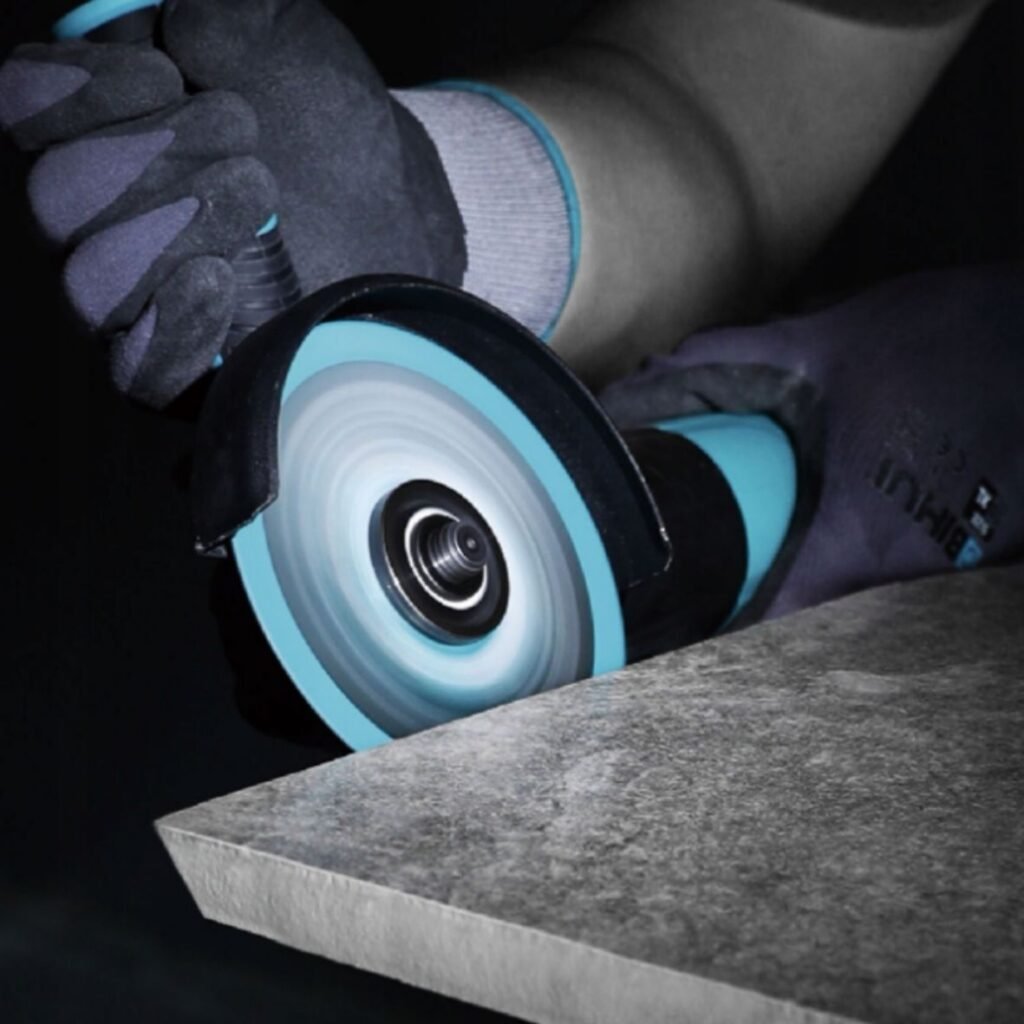
Choosing a tile blade starts with the material and the type of operation, and only then with the brand and price. Straight cuts in porcelain stoneware, 45° corners and glass processing each make different demands. A well-chosen blade reduces the need for later corrections, but it does not replace steady guidance. In the PROAGMAR range, compare specific SENDI, DISTAR and BIHUI models, paying attention to their stated applications.



First check the material and the edge finish you expect
Porcelain stoneware, wall tiles and glass behave differently during processing, which is why the term ‘tile blade’ is too general. For a visible edge, the surface quality after the diamond has passed will be especially important. When cutting a piece that will be hidden under a trim, the aesthetic criteria may differ, but the required dimension must still be kept. Test polished and glazed tiles on a sample from the same batch. A clean cut on one type of porcelain stoneware is no guarantee of the same result on another. Choose the blade for the job you repeat most often, taking into account the required finish quality.
Four parameters for machine compatibility
The outer diameter must be within the range approved for the specific machine and its guard. The bore must match the mounting system, without makeshift washers or home-made modifications. The blade’s maximum permitted speed must not be lower than the speed at which it will actually run. You also need to check the approved cooling method and the direction of rotation. For example, the BIHUI 120 mm blade described in the shop for WANDELI tile cutters has a 20 mm bore. The DISTAR PERFECT 125 mm has a 22.23 mm bore, so a similar tile application does not mean identical mounting.
Blade for straight cuts
According to the product page, the DISTAR PERFECT 125 mm is designed for high-quality straight cuts. It has a 1.5 mm thick rim and is intended for dry cutting. It is a specific example of an accessory that should be assessed in relation to a given type of cut. Its parameters should not automatically be applied to other blades bearing the DISTAR logo. A thinner body or a narrower cutting rim is not always the better choice for every material. When assessing the result, also consider the stiffness of the blade and how prone the whole set-up is to vibration.
SENDI EXTREME: blade for dry cutting porcelain stoneware and ceramics
The SENDI EXTREME 125 mm is described as a blade for cutting porcelain stoneware and ceramics on an angle grinder without cooling. It has a 22.23 mm bore and a 1.2 mm thick segment. The maximum speed stated on the product page is 12,500 rpm. The reinforced body is a design feature worth considering when comparing it with other thin blades. However, judge the final cut quality on your own tile, as the segment dimension alone does not describe all working conditions.
Blade for jolly and 45° mitre cuts
With jolly corners, what matters is holding the angle and controlling the thin edge at the tile face. For this kind of work, choose accessories that the manufacturer has explicitly designed for angled cutting. PROAGMAR describes the DISTAR GALAXY 125 mm as a blade for dry 45° cuts. The BIHUI range also includes models labelled JOLLY and ULTIMATE for this application. A wide diamond rim alone does not entitle you to grind freely with the side of the blade. The permitted scope of work must follow from the instructions for the specific blade, not from its appearance.
SENDI PERFECT EDGE: a separate choice for bevelling
The SENDI PERFECT EDGE 125 mm is designed for cutting and bevelling ceramic materials and porcelain stoneware. The product page allows for both dry and wet cutting, provided this is compatible with the tool in use. The bore is 22.23 mm, the rim thickness 1.6 mm and the rim height 25 mm. The maximum speed stated for this version is 12,000 rpm. This is a different limit from the SENDI EXTREME 125 mm, despite the same outer diameter. It is therefore worth comparing the PERFECT EDGE with the DISTAR GALAXY and BIHUI jolly models, rather than choosing a bevelling blade on thickness alone.
Wet or dry?
Cutting with water requires both a suitable blade and a machine approved for that configuration. With WANDELI, GLAZERIS or WERTEC tile cutters, check the specification of the specific model instead of choosing a blade by brand name alone. Water should reach the cutting zone in the way the machine’s design intends. Working with a blocked water feed can impair cooling and the removal of slurry. A blade intended exclusively for wet cutting must not be used dry. When dry cutting, on the other hand, you need to consider dust extraction, respiratory protection and the recommended duty cycle of the accessory.
What to check if chipping occurs?
First make sure the tile is stable and the offcut does not drop at the end of the cut. Then check the direction of rotation, the cleanliness of the mounting surfaces and that the blade is seated correctly. An overly aggressive feed rate can spoil the edge even with a correctly chosen model. Vibration, runout or damage to the blade require you to stop work and find the cause. If the manufacturer allows the diamonds to be exposed with a suitable dressing stone, do this in line with its recommendations. A dressing stone for the cutting rim will not repair a cracked or warped blade body.
How to put together a practical set of blades?
For varied work, it often makes more sense to have one blade for straight cuts and another for jolly cuts than to look for a single model for everything. Small cut-outs also call for checking the accessories intended for a mini grinder and its mounting. When ordering, state the machine model, the mounting diameter, the type of tile, its thickness and the intended cutting method. On this basis, compare specific SENDI, DISTAR and BIHUI blades at PROAGMAR so that the accessory suits both the material and the machine.